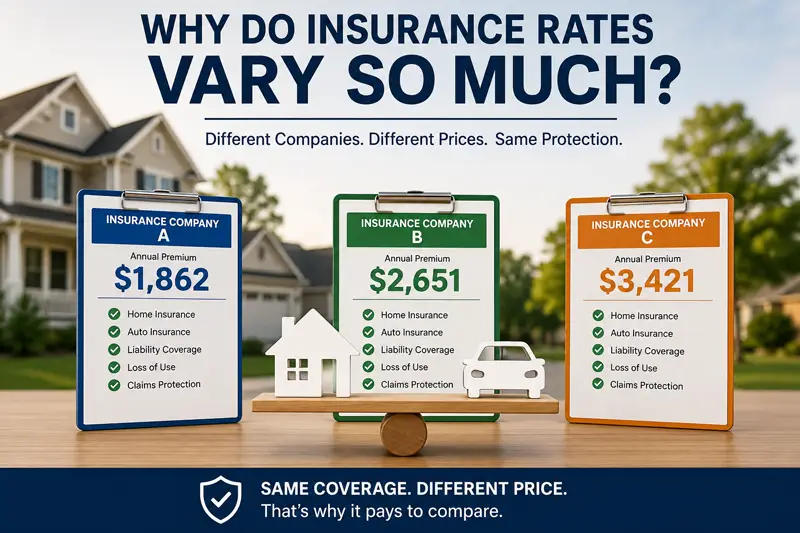
One of the questions we hear most often at our agency is: "Why is one…
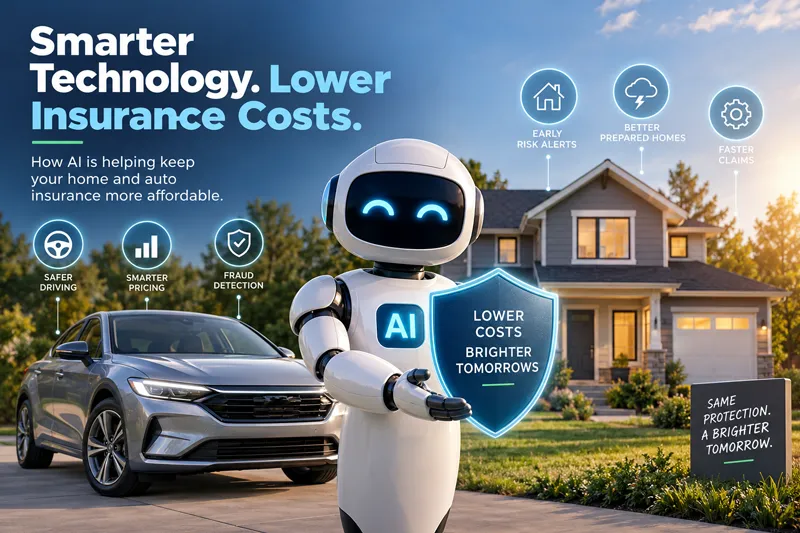
How AI Is Helping Lower Home and Auto Insurance Costs
Artificial intelligence is transforming industries around the world, and insurance is no exception. But for homeowners and drivers, one of the most important questions is simple: Can AI actually help lower insurance costs?
Potentially, yes.
AI is helping insurance companies evaluate risk more accurately, prevent losses, detect fraud, automate routine work, and process claims more efficiently. Those improvements can reduce the overall cost of providing insurance and, over time, help relieve some of the pressure pushing home and auto insurance premiums higher.
Here’s how artificial intelligence is changing insurance—and why consumers could benefit.
1. AI Can Help Insurers Price Risk More Accurately
Insurance pricing depends heavily on predicting risk.
Traditionally, auto insurers have considered factors such as driving history, vehicle type, mileage, and location. Home insurers evaluate characteristics including a home’s age, construction, roof, location, replacement cost, and previous claims.
AI gives insurers the ability to analyze much larger amounts of information and identify patterns that traditional methods may miss.
This can lead to more accurate risk assessments. When insurers understand risk more precisely, they may be able to reduce some of the uncertainty that gets built into insurance pricing.
For consumers with lower-than-average risk, more precise underwriting could potentially mean better pricing.
2. AI Can Help Prevent Expensive Home Insurance Claims
One of the biggest opportunities for AI in home insurance is loss prevention.
A small problem inside a home can quickly become an expensive insurance claim. A leaking pipe, for example, might cause relatively little damage if discovered immediately. If it goes unnoticed for several days, the resulting water damage could cost thousands of dollars.
Smart sensors and AI-powered monitoring systems can help identify unusual water usage, leaks, temperature changes, electrical problems, and other warning signs.
Instead of discovering a problem after significant damage has occurred, homeowners may receive an alert while there is still time to act.
Preventing or reducing the severity of claims benefits both homeowners and insurers. Over the long term, fewer expensive claims can help reduce pressure on home insurance costs.
3. AI Is Helping Detect Insurance Fraud
Insurance fraud increases costs throughout the insurance system.
AI can analyze large numbers of claims and identify unusual patterns, inconsistencies, or relationships that may warrant additional investigation.
A single claim might appear completely ordinary when viewed by itself. But when compared with thousands or millions of other claims, technology may identify patterns that aren’t immediately obvious to a human reviewer.
AI doesn’t necessarily determine whether fraud has occurred. Instead, it can help insurance professionals identify claims that deserve closer examination.
Reducing fraudulent payouts means fewer unnecessary costs being absorbed by insurers and, ultimately, policyholders.
4. AI Can Make Insurance Claims Faster and More Efficient
Claims can be expensive to administer.
They may involve photographs, repair estimates, documents, inspections, phone calls, adjusters, contractors, and multiple levels of review.
Artificial intelligence can automate portions of this process.
AI tools can help organize documents, analyze damage photographs, extract information from reports, identify missing information, and route a claim to the appropriate person.
Simple claims may be resolved more efficiently, while complicated claims can receive more attention from experienced claims professionals.
That combination can mean a faster claims experience for customers and lower administrative expenses for insurers.
5. AI Can Improve Auto Damage and Repair Estimates
Artificial intelligence is also changing how vehicle damage is evaluated.
AI-powered image analysis can help identify damaged vehicle components from photographs and assist in estimating the repairs that may be necessary.
The goal isn’t necessarily to eliminate human adjusters or repair professionals. Instead, AI can give them additional information and automate repetitive parts of the estimating process.
More efficient and consistent estimates can help reduce unnecessary expenses and get vehicles repaired faster.
Because repair costs are a major component of auto insurance claims, even relatively small efficiency improvements can become significant when applied across millions of claims.
6. AI May Help Homeowners Prepare for Severe Weather
AI could be particularly valuable in areas exposed to hurricanes, wildfires, hail, flooding, and other natural hazards.
Advanced models can analyze information such as weather patterns, historical claims, property characteristics, aerial or satellite imagery, and geographic risk.
This information can help insurers better understand which properties may be vulnerable and identify steps homeowners can take to reduce potential damage.
Depending on the risk, those improvements might include stronger roofing, better drainage, vegetation management, water detection systems, storm protection, or other mitigation measures.
Preventing a catastrophic claim is far less expensive than repairing a home after a major loss.
7. AI Can Reward Safer Driving
One of the most visible examples of AI in auto insurance involves telematics and usage-based insurance.
With a customer’s participation, these programs can collect information about driving behaviors such as mileage, braking, acceleration, and when a vehicle is driven.
AI can analyze that information to develop a more individualized understanding of driving risk.
For safe drivers, this can create opportunities for insurance discounts or premiums that better reflect their actual driving behavior.
There is another potential benefit: feedback from these systems may encourage drivers to develop safer habits.
Fewer accidents mean fewer injuries, fewer insurance claims, and lower costs throughout the insurance system.
8. AI Can Reduce Insurance Administrative Costs
Not every benefit of artificial intelligence is directly connected to a claim.
Insurance companies perform enormous amounts of administrative work, from processing applications and reviewing documents to answering routine questions and updating policy information.
AI can automate or assist with many repetitive tasks.
This allows employees to concentrate on situations requiring judgment, expertise, or personal attention while technology handles routine work more efficiently.
Reducing the cost of administering insurance policies can help insurers operate more efficiently—and operating efficiency is one piece of the insurance affordability puzzle.
Will AI Actually Lower Your Home or Auto Insurance Premium?
Not necessarily, and certainly not overnight.
Many factors affect insurance premiums that artificial intelligence cannot control.
Home insurance prices can be affected by severe weather, construction costs, labor expenses, reinsurance costs, litigation, property values, and the increasing cost of rebuilding homes.
Auto insurance premiums are influenced by vehicle prices, repair costs, medical expenses, accident frequency, replacement parts, labor, litigation, and the growing amount of sophisticated technology installed in modern vehicles.
AI won’t eliminate those expenses.
What AI can do is help insurers operate more efficiently and potentially reduce costs that might otherwise contribute to higher premiums.
That distinction is important.
The Future of AI in Insurance May Be About Prevention
Perhaps the biggest long-term benefit of AI in insurance isn’t simply processing claims faster.
It’s preventing claims from happening in the first place.
Imagine an insurance company helping a homeowner discover a water leak before it destroys flooring and drywall. Or technology identifying vulnerabilities in a home before the next major storm. Or an auto insurance program helping a driver recognize risky habits before those habits result in an accident.
That represents an important evolution in insurance.
Instead of only helping customers recover financially after something goes wrong, insurers can increasingly use technology to help customers prevent losses before they happen.
When insurers and customers can prevent losses together, everybody benefits.
How AI Could Help Keep Insurance More Affordable
Artificial intelligence isn’t a magic solution for rising home and auto insurance premiums. Insurance costs are influenced by too many economic, environmental, and legal factors for any single technology to solve the affordability problem.
But AI is becoming an important tool.
By improving risk assessment, preventing property damage, encouraging safer driving, detecting fraud, automating routine work, and making claims more efficient, artificial intelligence can reduce some of the costs associated with providing insurance.
And those savings matter.
Every accident prevented, fraudulent claim detected, water leak caught early, and administrative process automated represents money that doesn’t have to be spent elsewhere in the insurance system.
As AI continues to develop, consumers may discover that one of its most valuable applications isn’t a futuristic robot or chatbot.
It may simply be better, more efficient—and potentially more affordable—home and auto insurance.
Frequently Asked Questions About AI and Insurance Costs
How is AI being used in insurance?
Insurance companies can use artificial intelligence for underwriting, risk assessment, fraud detection, claims processing, damage assessment, customer service, loss prevention, and other operational functions.
Can AI lower my car insurance premium?
AI itself doesn’t guarantee a lower premium. However, technologies such as telematics and usage-based insurance can help insurers evaluate individual driving behavior more precisely. Some safe drivers may qualify for discounts or more favorable pricing.
How can AI help reduce home insurance claims?
AI can work with smart-home technology and other data sources to help identify risks such as water leaks or potential property vulnerabilities before they result in major damage.
Does AI replace insurance agents and adjusters?
AI is more likely to automate certain repetitive tasks and provide additional information to insurance professionals. Many insurance decisions and complex claims still benefit from human judgment, expertise, and customer service.
Why are insurance rates increasing if AI is reducing costs?
Insurance premiums are affected by many factors beyond administrative efficiency, including severe weather, construction and repair costs, vehicle technology, medical expenses, litigation, reinsurance costs, and claim frequency and severity. AI can help insurers manage some expenses, but it cannot eliminate all the forces contributing to higher premiums.
Technology is changing the insurance industry, but finding the right coverage still requires understanding your individual needs. Reviewing your home and auto insurance regularly can help you identify available discounts, coverage gaps, and opportunities to save.
Looking for ways to reduce your home or auto insurance costs? Contact us today for an insurance review and see whether better coverage or additional savings may be available.
Related Posts